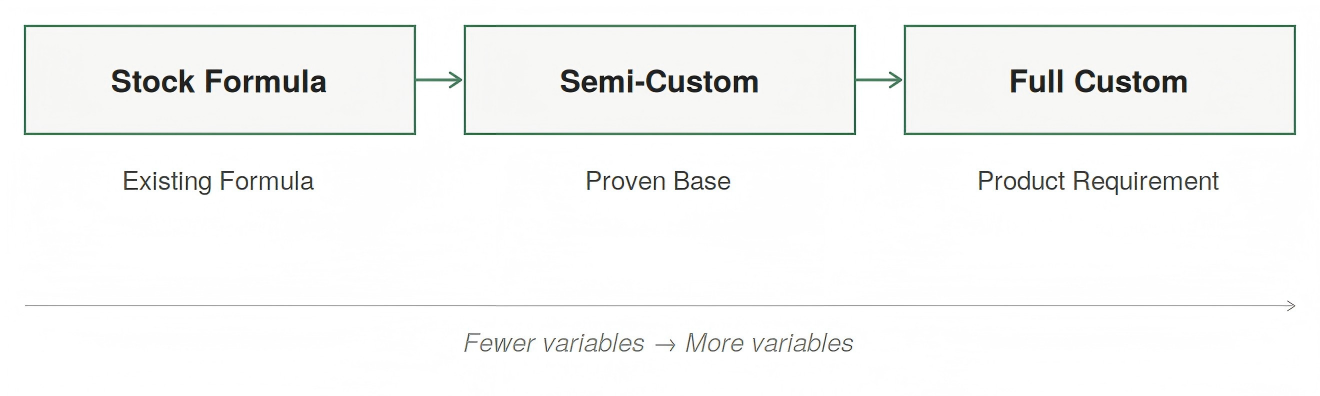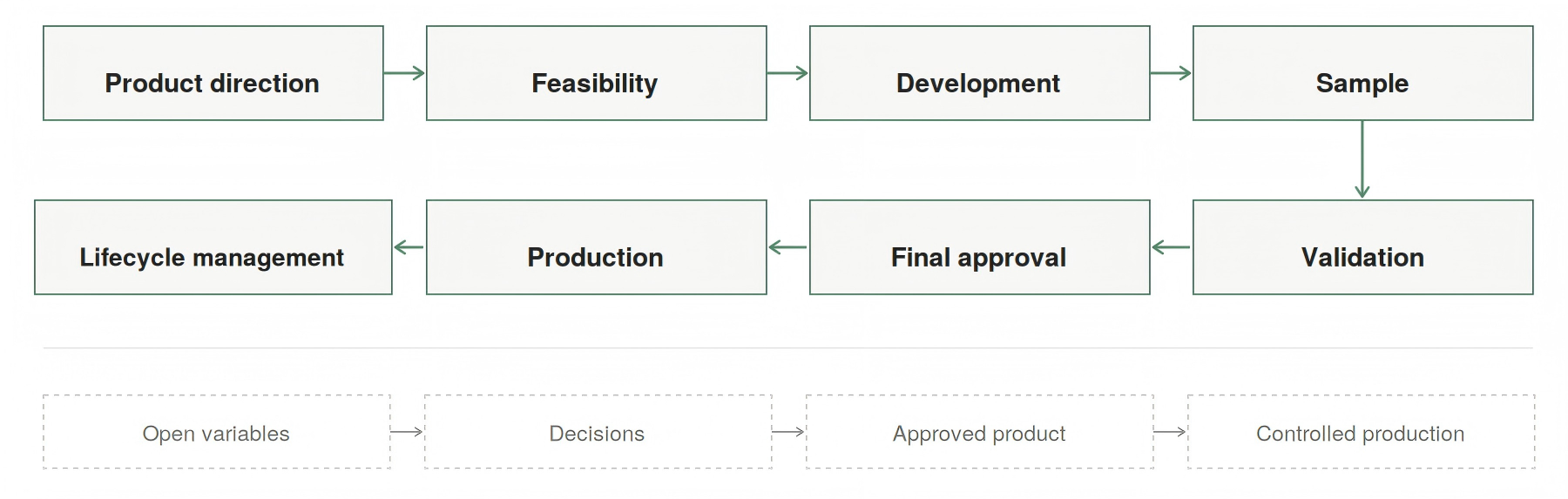

Defining the problem
In formulation work, "choosing a preservative" often gets reduced to a lookup exercise: find the highest concentration a regulation allows, add it, pass the test, done. That understanding skips a critical distinction: regulatory compliance is not the same thing as real-world effectiveness. A product can meet every ingredient and concentration limit on paper and still face microbial contamination in actual use — a pump that gets opened and closed dozens of times, fingers touching the product surface, temperature swings during shipping and storage.
Professional preservation design doesn't start with "how much preservative do I add." It starts with a different question: over this product's entire life cycle, what contamination pathways does it actually need to withstand? That question leads to a core concept in formulation science: multi-hurdle preservation design.
The logic of multi-hurdle design
The basic idea behind multi-hurdle design is straightforward: instead of relying on a single preservative to carry the entire antimicrobial load, several dimensions of the formulation share that burden, so no single point of failure has to do all the work. The common hurdles are:
pH control. Most pathogenic bacteria and molds grow far more slowly in a mildly acidic environment (roughly pH 4.5–5.5). Formulation pH is itself the first hurdle.
Water activity (Aw). Microbial growth depends on available free water, not just total water content. Humectants like glycerin or butylene glycol lower water activity and suppress microbial growth without adding more preservative.
Packaging format. A wide-mouth jar and a pump or squeeze-tube bottle carry very different contamination risk. Every time a jar is opened, fingers touch the product and it's exposed to air; pump and tube formats cut that exposure path dramatically. Packaging choice is part of the preservation strategy, not just an aesthetics-and-cost decision.
Auxiliary antimicrobial ingredients. Chelating agents (natural alternatives to EDTA, for example) bind the metal ions microbes need for metabolism, indirectly suppressing growth. Certain plant extracts also carry some auxiliary antimicrobial activity, which we'll get into below.
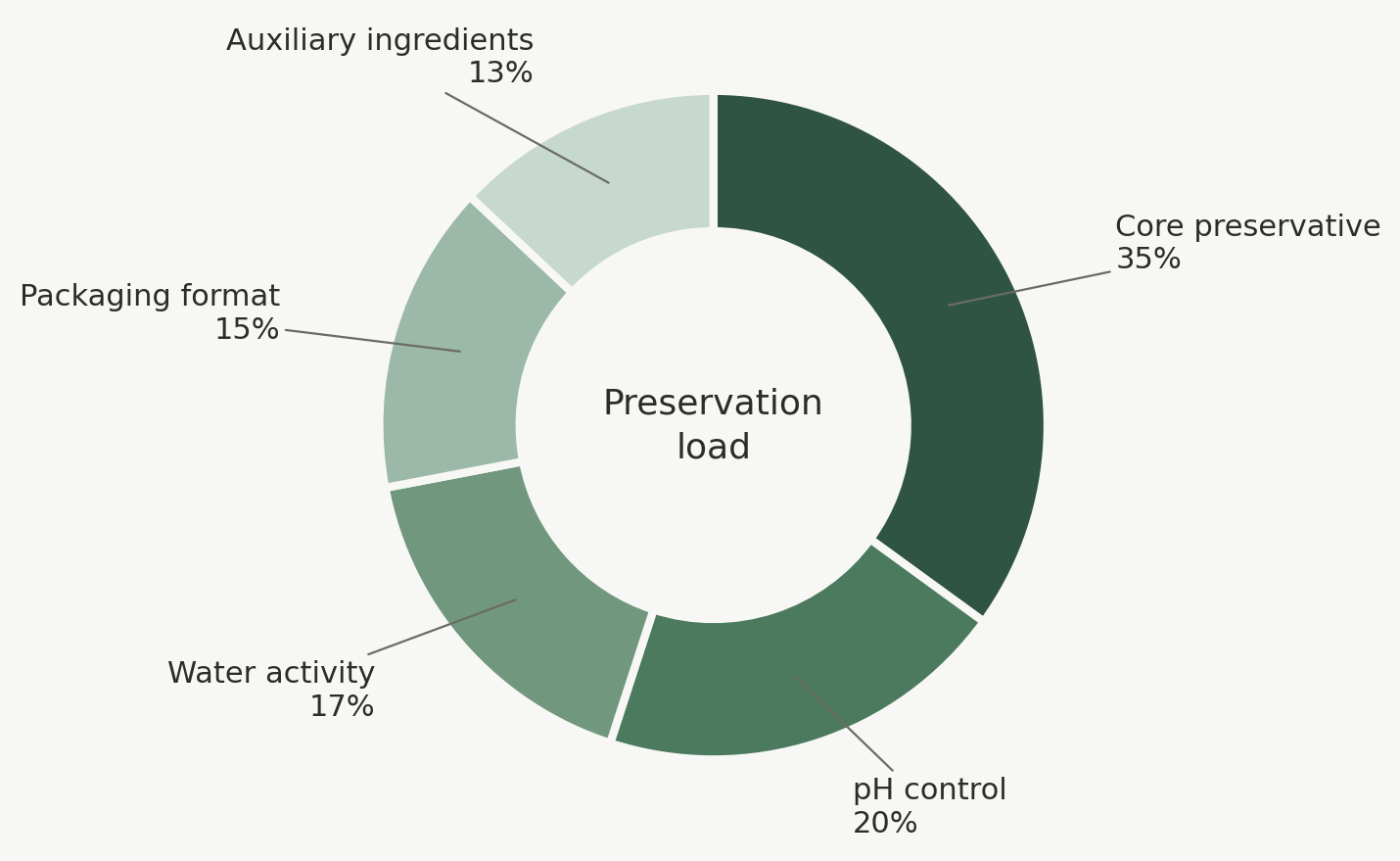
The point of multi-hurdle design is this: when every hurdle carries a share of the load, the concentration of the core chemical preservative can come down — and the system as a whole becomes more stable, not less, because it no longer depends on any single ingredient being perfectly effective. If one hurdle fluctuates, the others still hold the line.
The real trade-offs of natural and plant-based preservation
This is an honest topic that gets avoided more often than it should. "Preservative-free" and "natural preservation" have become popular marketing language in recent years, but the reality in formulation science is this: no single plant extract, currently, can match a validated preservative system on both broad-spectrum coverage — bacteria, yeast, and mold at once — and long-term stability.
Some plant extracts — certain polyphenols and essential oil components, for instance — do carry real antimicrobial activity and can serve as a supporting hurdle within a multi-hurdle system, reducing how much the primary preservative needs to carry. But used as a standalone, primary preservative, they tend to run into the same three problems:
Narrow spectrum. Most plant-derived compounds are effective against one class of microbe — Gram-positive bacteria, say — with little to no activity against mold or yeast.
Batch-to-batch variability. The active compound content in plant extracts shifts with growing region and extraction process, so batches vary in ways that make it hard to establish a reliable minimum inhibitory concentration (MIC), unlike synthetic preservatives.
Gaps in long-term shelf-life validation. Many "natural preservation" claims aren't backed by complete challenge-test and accelerated-stability data.
This isn't a theoretical concern — it's something we've confirmed repeatedly in our own testing. In one body-wash challenge test, a plant-based preservative used on its own, even at a reasonably high concentration, showed heavy bacterial growth by day 7 and failed the evaluation. The same plant extract combined with a conventional chemical preservative showed a meaningfully improved result, with some combinations holding sterile through day 28.
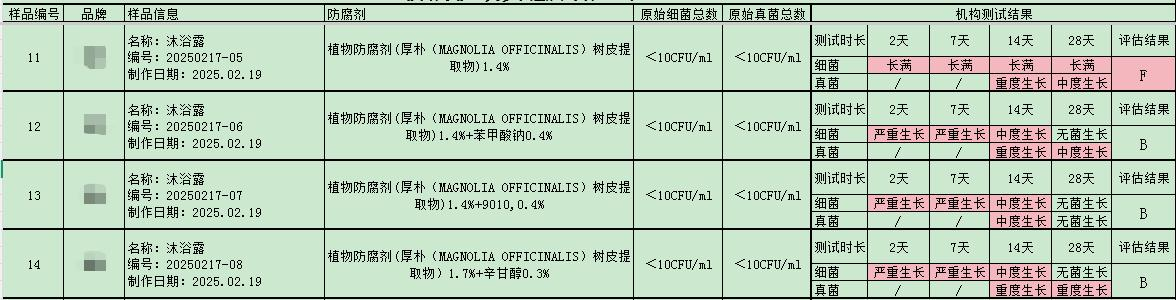
That result doesn't say plant preservatives don't work. It says they can't carry the load alone — they're better suited to a supporting role within a multi-hurdle system than to serving as the primary defense.
Published research points the same direction. An extract from Sapindus mukorossi peel shows clear in vitro inhibition of Candida albicans, but the concentration required (MIC 62.5 mg/L) is far higher than what a conventional antifungal needs [1]. Flavonoids extracted from jasmine tea show relatively strong inhibition against Staphylococcus aureus (MIC 15.6 mg/L), but the effective concentration against Gram-negative bacteria like E. coli and Pseudomonas aeruginosa is more than an order of magnitude higher [2]. Both examples point to the same underlying reality: plant extracts tend to have a narrow inhibition spectrum, working well against one class of microbe and barely at all against another — which is exactly what "lacking broad-spectrum coverage" looks like in practice.
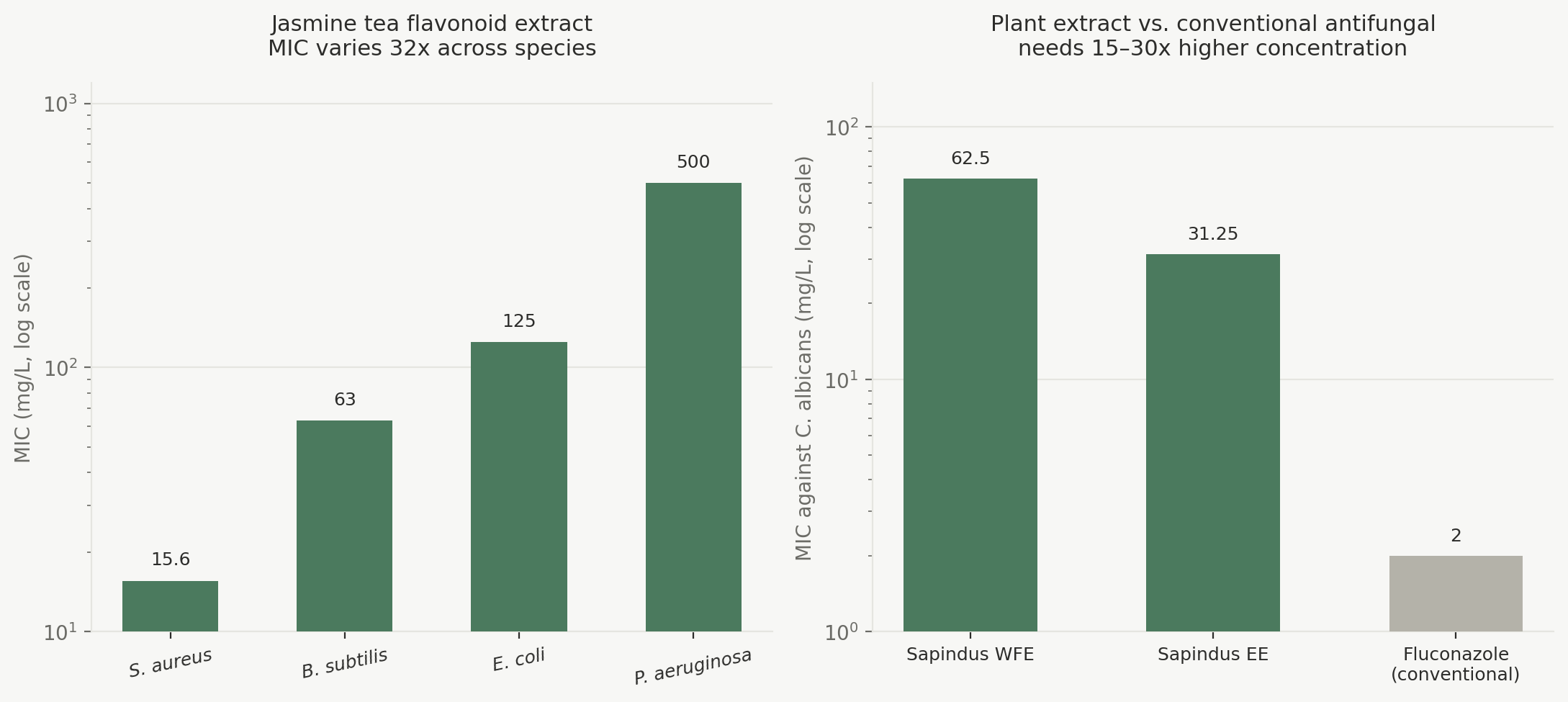
What we want brand partners to take from this isn't dismissal of the "natural" direction — it has real value, both as a supporting hurdle and in how it resonates with consumers — but we won't compromise a product's microbial safety floor to chase "zero preservative" marketing claims.
Challenge testing: verifying that a design actually works
No matter how sound the multi-hurdle logic is on paper, it still has to clear one hard checkpoint: the challenge test. This isn't a compliance formality — it's how a formulator actually confirms whether a preservation system holds up.
The logic is direct: inoculate the product with a specified concentration of microorganisms, then sample at fixed intervals — typically day 7, day 14, and day 28 — to track how far the viable count drops and whether it stays down. Internationally, the European Pharmacopoeia (EP), the U.S. Pharmacopeia (USP), ISO 11930, and China's national cosmetic preservative challenge-test guidance all specify the same five test organisms: Staphylococcus aureus, Pseudomonas aeruginosa, Escherichia coli, Candida albicans, and Aspergillus brasiliensis — covering Gram-positive bacteria, Gram-negative bacteria, yeast, and mold. This is also the standard panel we use in our own routine testing.
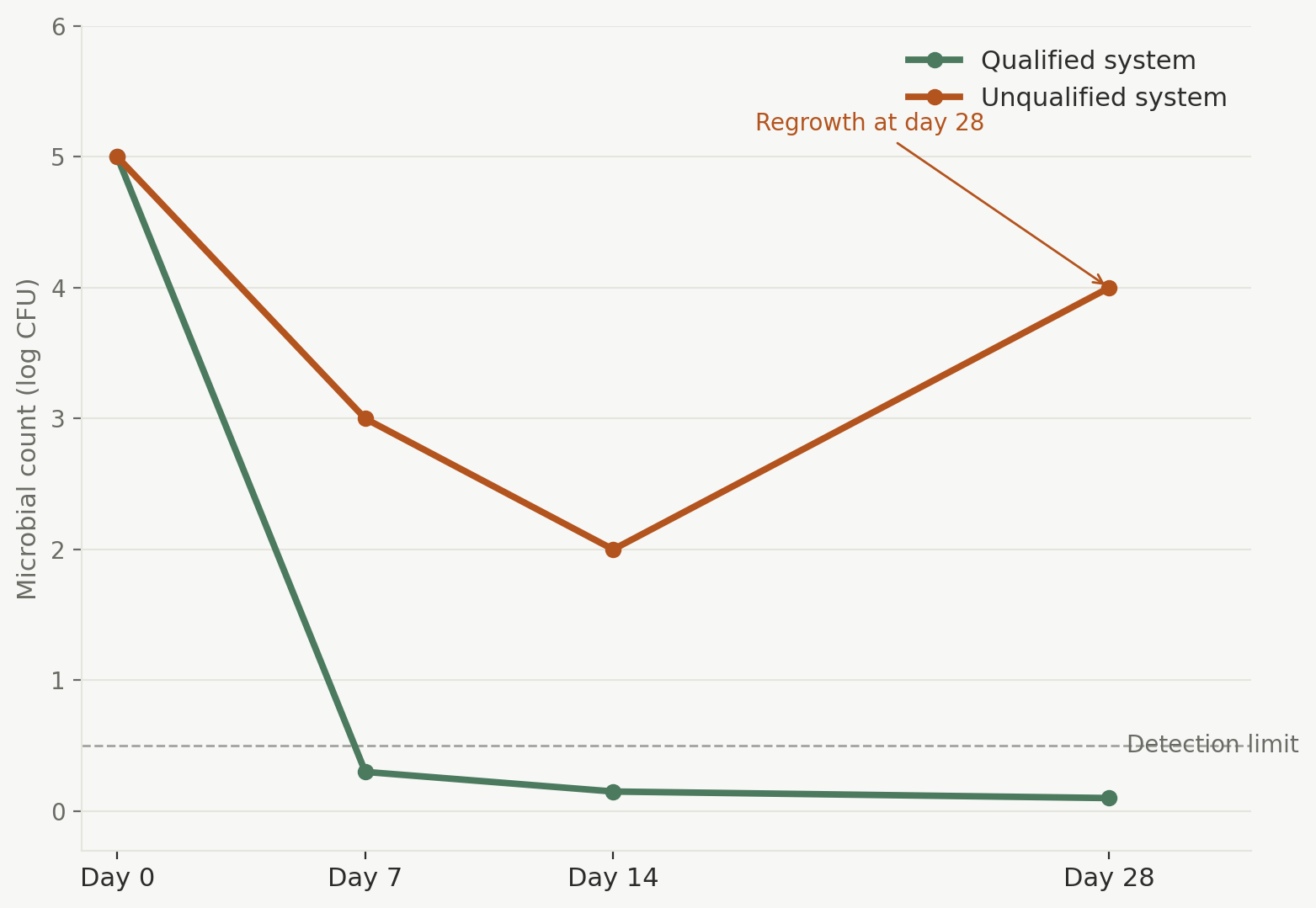
What determines a pass isn't whether a preservative was added — it's the shape of that curve. Bacterial contamination is typically expected to drop below the detection limit within 7 days and stay there through day 28; fungal contamination is judged on a somewhat longer, more lenient timeline, since molds and yeasts grow more slowly and respond differently to preservatives. If a product looks clean at day 7 but shows regrowth by day 28, that's a sign the preservation system has a gap somewhere — maybe one hurdle lacks long-term stability, or the preservative itself is being partially neutralized by another ingredient in the formula, such as certain surfactants. That's the real value of challenge testing: it measures how the system holds up over real time, not what's written on the formulation sheet.
What this means for brand partners
Multi-hurdle design is, at its core, a way of planning ahead rather than patching a gap after the fact. pH, water activity, packaging format, auxiliary antimicrobial ingredients — these variables are already in play from the earliest stages of formulation. If preservation only gets considered once a sample already exists, there's very little room left to adjust, and the only lever usually still available is raising the preservative concentration — exactly the outcome a well-designed system is meant to avoid.
That's a point we keep coming back to in development partnerships: preservation design isn't a finishing step after the formula is done. It needs to move in parallel with ingredient selection and packaging choice. Whether a product can meet consumer expectations for "gentle" and "low-irritation" while still holding up under a challenge test is usually decided in large part during the very first project conversation.
The core chemical preservative in that system is, more often than not, phenoxyethanol — we cover why it's become the default choice, and when it isn't, in Why Phenoxyethanol Is the Default: A Practical Guide to Cosmetic Preservatives.
Want to see how preservation fits into our overall formulation process? Learn about our formulation approach.
References
[1] Qiu J, Li L, Wei M, et al. Chemical Component and Inhibition Activity Against Candida albicans of Sapindus mukorossi Peel Extract. Chemistry and Industry of Forest Products, 2020, 40(3): 85-91.
[2] Zhang Z, Hao X, Dai S, Gao Y. Study on Extraction of Flavonoids from Jasmine Tea and Their Antimicrobial Activities. Guangzhou Chemical Industry, 2020, 48(6): 93-95.