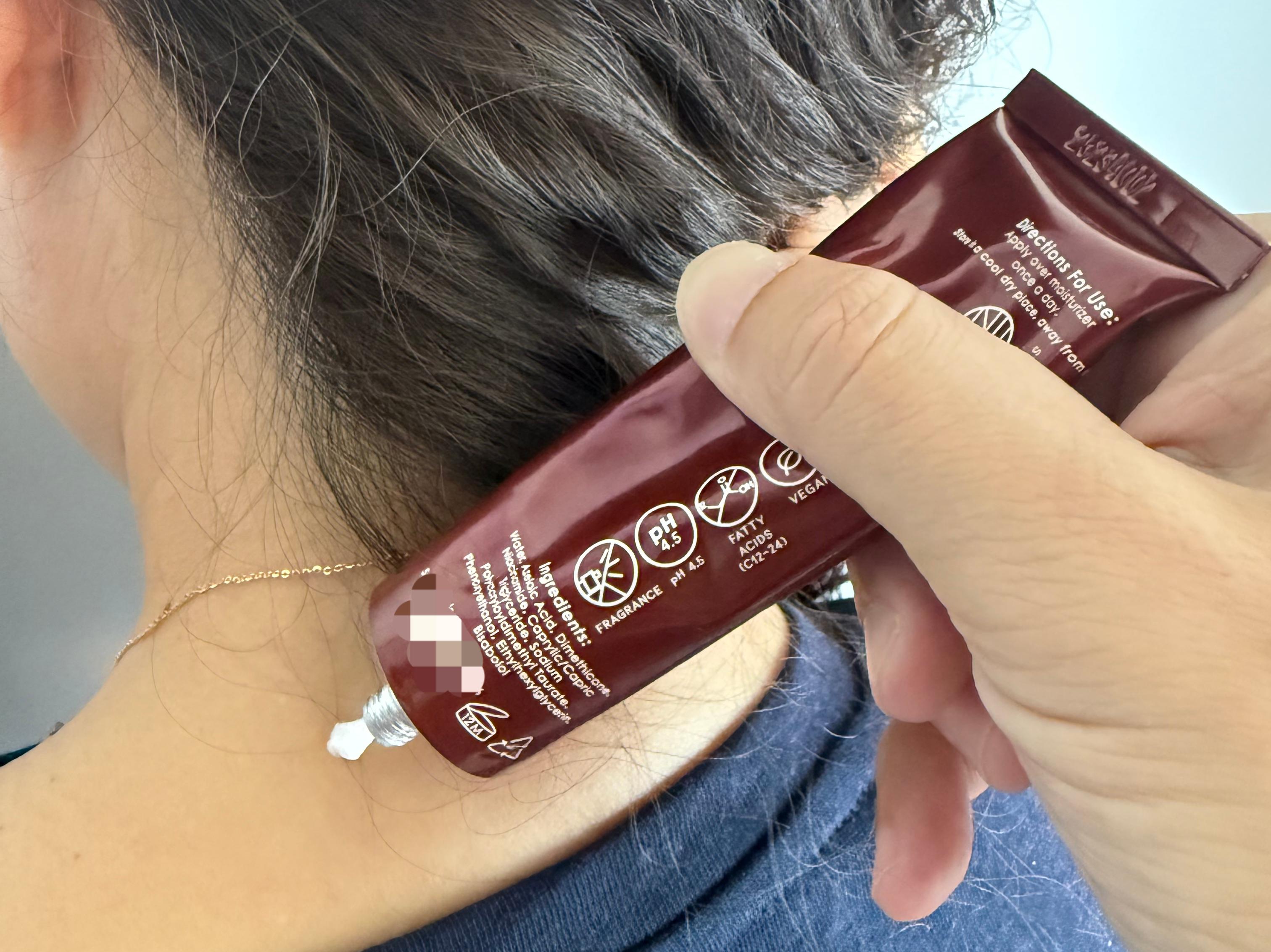
The client is a US indie skincare brand built around a single, non-negotiable brand standard: every product must be safe for people with Malassezia folliculitis. Malassezia is a lipophilic yeast naturally present on human skin that selectively metabolizes fatty acid esters in the C12–C24 carbon chain range. The brand's ingredient review framework flags any cosmetic ingredient containing chains in this window as a potential risk — including emollients, surface-coating agents on UV filter particles, ester solvents, and certain pigments.
Their target product was a tinted mineral sunscreen at SPF 50, suitable for US market launch. A Malassezia-safe sunscreen at this specification did not exist commercially. The formula had to use only physical UV filters, minimize white cast across a range of skin tones, achieve a lightweight daily-wear feel, and clear every ingredient through the safety framework before it could be included.
Enrich began formulation development in early 2025. Over approximately 12 months, the team worked through a complete ingredient audit, multiple tint development rounds, and an in-person site visit to the client's US headquarters before a confirmed formula was sent for ISO 24444 in vivo SPF testing through Intertek.
Starting with a full ingredient audit — before formulation.
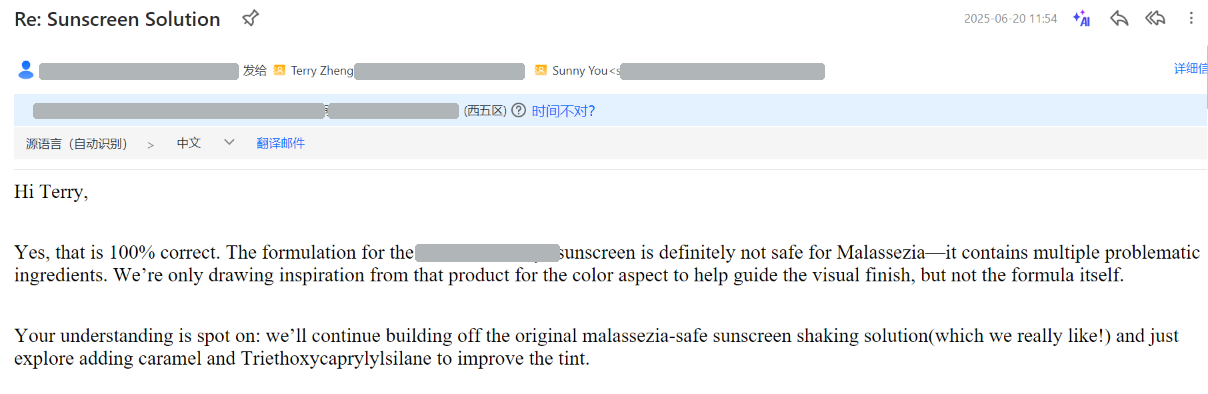
The first task was not building a formula. It was establishing which ingredients could be in it. Zinc oxide cleared immediately: the team used a micronized, triethoxycaprylylsilane-treated grade — a silane coating with no fatty acid chains. Titanium dioxide did not clear. The TiO2 technical data sheet showed a stearic acid surface coating at approximately 11% by weight. Stearic acid is a C18 fatty acid, within the Malassezia risk range. TiO2 was removed from the formula entirely. All UV protection was carried by zinc oxide alone.
This decision had direct consequences: without TiO2 as a co-filter, ZnO loading had to remain higher to maintain protection — which made white cast management harder throughout development.
Client Feedback · September 2025"The alumina + ~11% stearic acid coating is a fatty acid that's problematic for Malassezia — we suggest using an alternative TiO2 that is not surface-coated."
— Excerpted from client's technical documents review email (full record in appendix image)

Abandoning the shaking solution format.
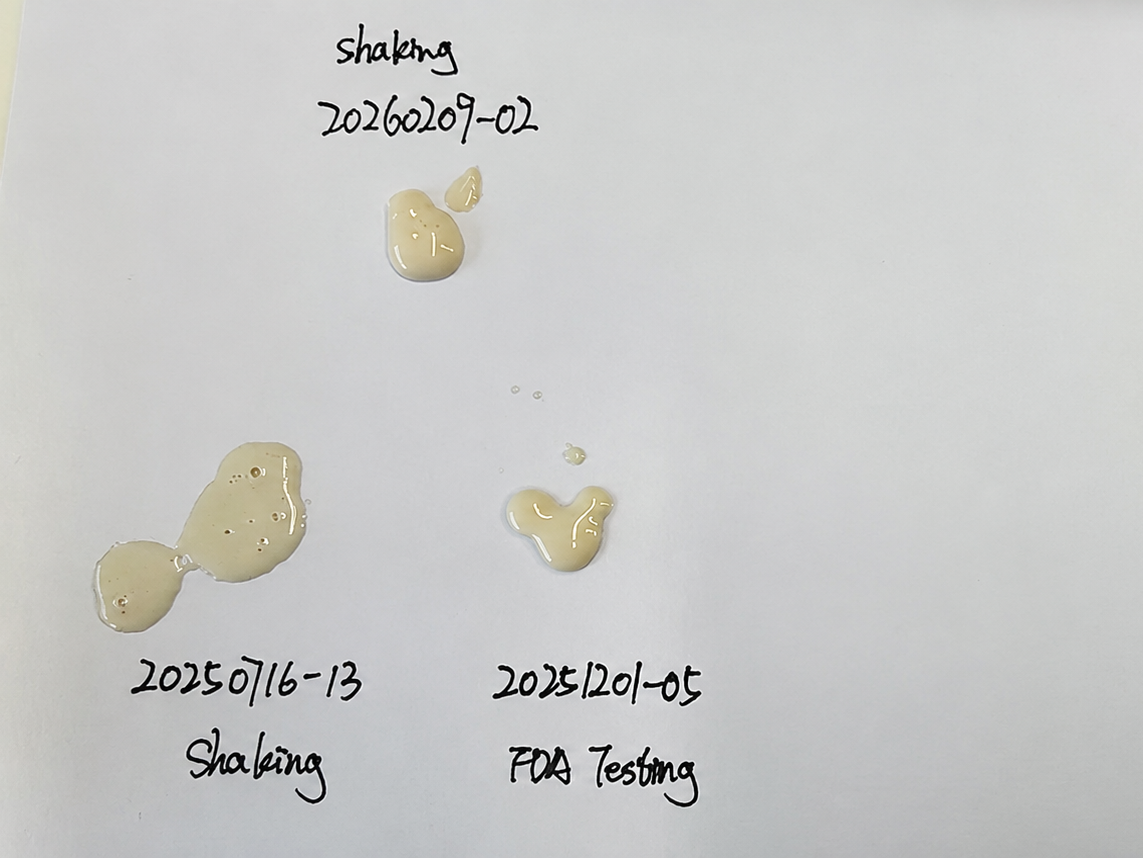
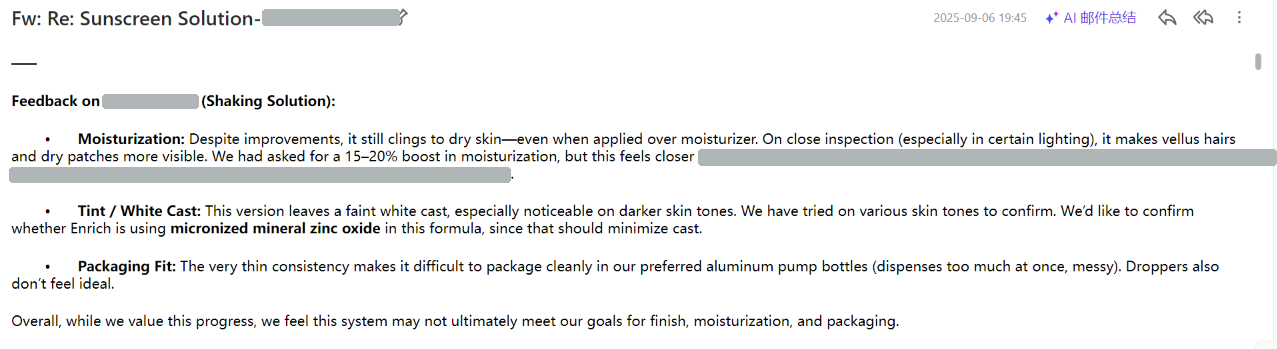
Early development ran two parallel tracks: a biphasic shaking solution (similar to Japanese UV milks) and a conventional cream-lotion emulsion. The shaking solution offered a lighter initial texture but was incompatible with the client's preferred aluminum pump packaging, produced visible white cast, and fell short on moisturization despite several adjustment rounds. After an in-person meeting at the client's headquarters in Spokane, Washington in September 2025, both teams agreed to close that track. The project committed fully to a cream-lotion emulsion that could be pumped, stand alone as a daily moisturizer, and support tint correction.
Client Feedback · September 2025"We had asked for a 15–20% boost in moisturization, but this feels closer to only ~5–10%."
— Excerpted from client feedback on the shaking solution format (full record in appendix image)
Iterating tint across skin tones under controlled lighting.
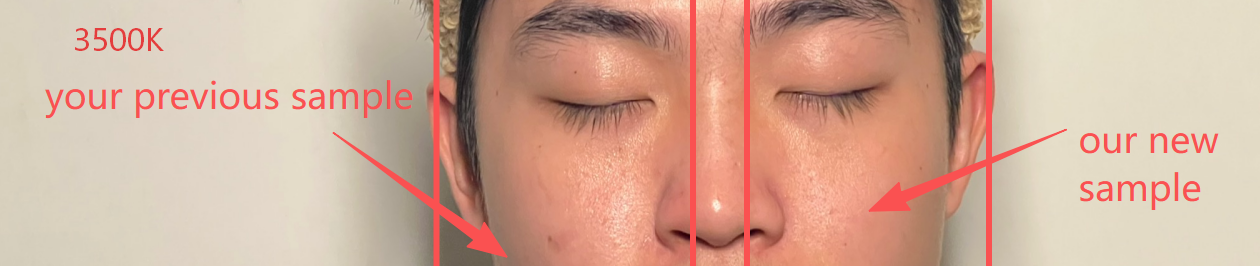
White cast correction required testing across two distinct skin tones under calibrated lighting conditions: 3200K, 4500K, and 6500K. The target was a warm, golden-yellow undertone capable of neutralizing white cast across a wide range of complexions.
Caramel pigment was tested first. It failed in Enrich's emulsion system: light refraction in the oil phase shifted the perceived color darker, producing a beige-brown rather than yellow result. Iron oxide CI 77492 (yellow iron oxide) was identified as the effective solution. Multiple concentration iterations followed, each round including split-face photographs taken on volunteers at Enrich's Xiamen facility under the same controlled lighting — left side of the face showing the previous version, right side showing the new shade.
In December 2025, the client confirmed the tint met their target on both tested skin tones.
Identifying and correcting mid-development ingredient issues.
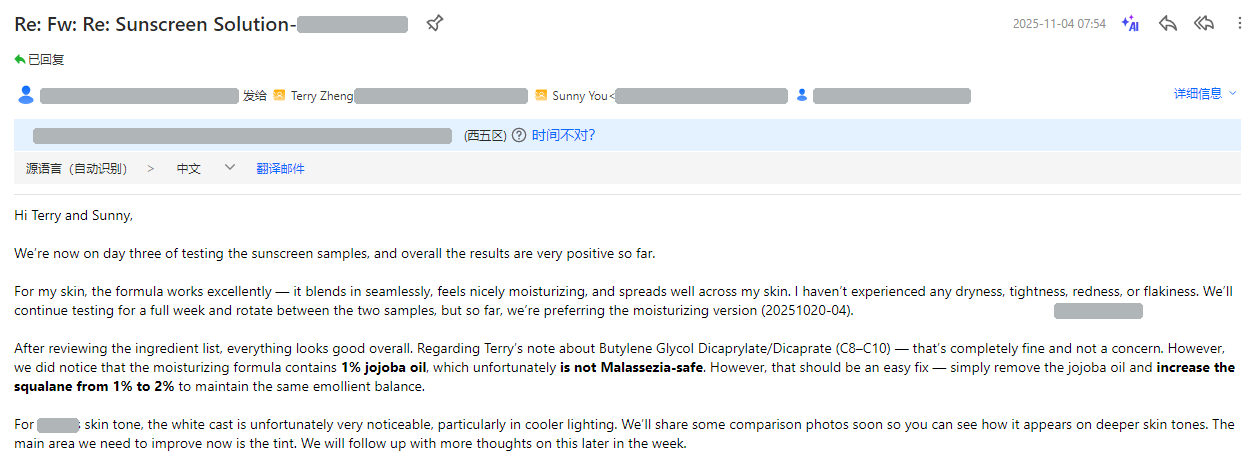
Two additional Malassezia safety checks were triggered during formulation refinement. Butylene Glycol Dicaprylate/Dicaprate was reviewed for its C8–C10 ester structure and confirmed safe: the chain length falls below the C12 threshold. Jojoba oil — present at 1% in an early prototype — was identified as not Malassezia-safe. Jojoba is a liquid wax ester composed primarily of C20–C22 fatty chains. It was removed and replaced by increasing squalane from 1% to 2%, preserving the emollient balance without introducing a flagged ingredient.
Client Feedback · November 2025"We did notice that the moisturizing formula contains 1% jojoba oil, which unfortunately is not Malassezia-safe. However, that should be an easy fix — simply remove the jojoba oil and increase the squalane from 1% to 2% to maintain the same emollient balance."
— Excerpted from client's ingredient review email (full record in appendix image)
Coordinating ISO 24444 in vivo SPF testing through Intertek.
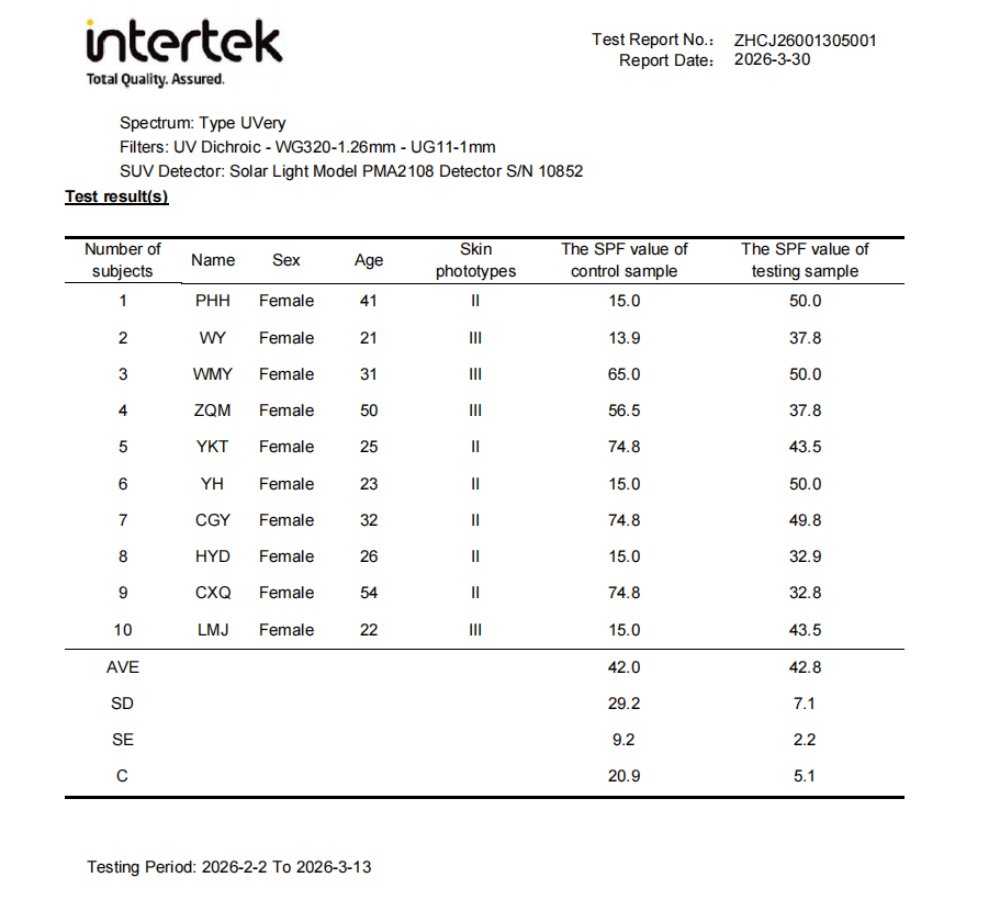
With formula 20251201-05 confirmed, Enrich coordinated in vivo SPF testing through Intertek Testing Services (Guangzhou Branch). Ten female subjects aged 21–54, Fitzpatrick phototypes II–III, participated in testing conducted from February 2 to March 13, 2026. Testing followed ISO 24444 (Cosmetics — Sun protection test methods — In vivo determination of the sun protection factor, second edition 2019). The test report (No. ZHCJ26001305001) was issued March 30, 2026.
For more on how testing gets timed and budgeted across a project like this, see Cosmetic Testing Before Production.
The core difficulty in this project was not any single formulation problem. The Malassezia safety constraint created a chain reaction: every substitution altered the formula in a way that opened a new problem elsewhere.
Any final SPF label claim will need to go through the same claim-substantiation logic covered in our Cosmetic Compliance pillar.
Formula 20251201-05 — a zinc oxide-only tinted cream using 2% squalane as the primary emollient and iron oxide CI 77492 for tint — was confirmed by the client as Shade #1 in December 2025. Every ingredient in the formula cleared the Malassezia safety framework. The formula is compatible with aluminum pump packaging. The tint met the client's target on both tested skin tones.
ISO 24444 in vivo SPF testing, conducted by Intertek Testing Services (Report No. ZHCJ26001305001, issued March 30, 2026), returned a result of SPF 42 across 10 subjects (mean 42.8; SD 7.1; SE 2.2). The client has confirmed intent to place a production order for Shade #1.
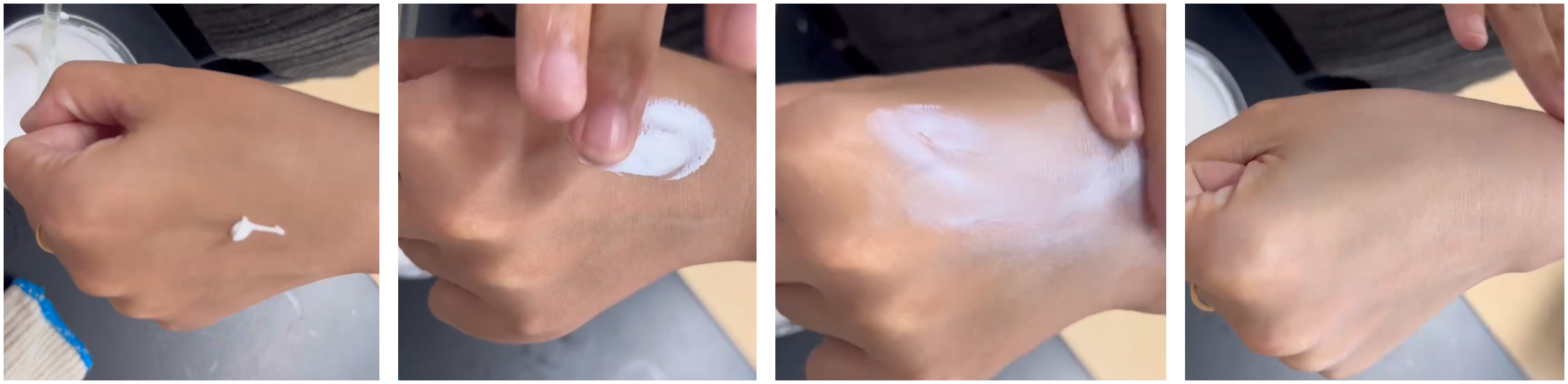
Client Feedback · December 2025"Your team absolutely nailed the reference target — this latest sample matches what we were going for. Amazing work — everyone at Enrich is so talented!"
— Excerpted from client's Shade #1 approval email (full record above)

Talk to our formulation team about your brief, timeline, and compliance requirements.
Talk to our team